3 Jul 2026
Seamless Money Movement: Payment Systems That Tie Sports Wagers to Live Dealer Rounds and Jackpot Rewards
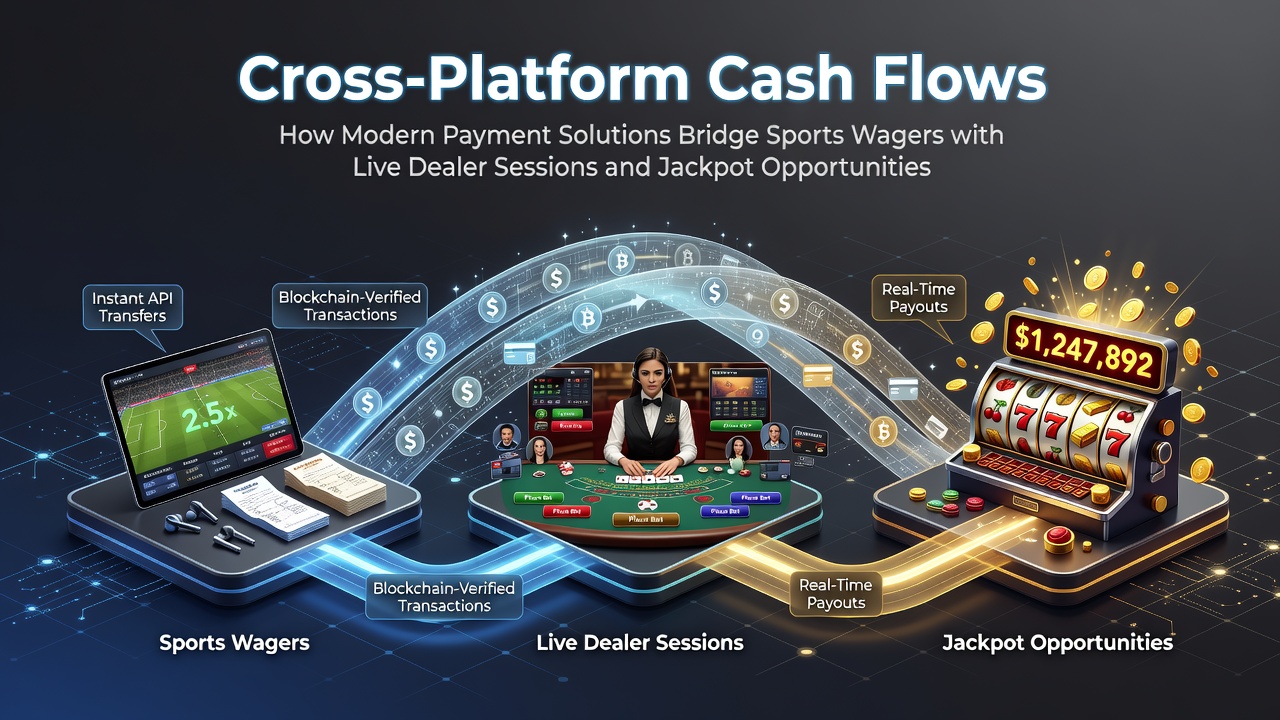
Payment infrastructure now moves funds between sports betting accounts, live dealer platforms, and jackpot pools without requiring separate deposits or manual transfers, and this integration relies on API-driven wallets that update balances in real time across multiple verticals. Operators use tokenised credit lines and instant settlement protocols so that a win from a football wager appears available for a roulette session within seconds, while the same balance can feed into a progressive jackpot pool when the player switches games.
API Integration and Real-Time Settlement Protocols
Modern gateways connect sportsbooks with casino engines through standardised APIs that handle currency conversion, compliance checks, and fraud screening in a single transaction flow. Data from July 2026 shows these systems process millions of cross-vertical transfers daily, with settlement times dropping below two seconds in most regulated markets according to reports issued by the American Gaming Association. The technology eliminates the old requirement for players to cash out and re-deposit, replacing it with a unified ledger that tracks every movement while maintaining separate ledgers for tax and regulatory reporting.
Security Layers and Regulatory Compliance Across Regions
Encryption standards and multi-factor authentication sit at every transfer point, yet the user experience remains uninterrupted because verification occurs in the background. Regulatory bodies in multiple jurisdictions, including the Nevada Gaming Control Board and the Australian Communications and Media Authority, require transaction logs that link each sports wager to subsequent live dealer play and any jackpot contributions, creating an auditable trail without slowing gameplay. These requirements have driven adoption of blockchain-based reconciliation tools that timestamp every movement while preserving player privacy through zero-knowledge proofs.
Player Journey Examples in Unified Ecosystems
Consider a typical session where a user places a live sports bet during a tennis match, watches the funds settle automatically, then moves the resulting balance into a blackjack table where the dealer draws cards in real time. Should that same balance trigger eligibility for a jackpot slot, the system allocates a fraction of the wager to the progressive meter without additional steps. Observers note that such sequences now account for a growing share of total handle because friction reduction keeps players engaged longer across verticals. Industry research from the University of Nevada, Las Vegas gaming laboratory indicates that platforms offering seamless transfers record higher average session lengths compared with those requiring repeated deposits.

Jackpot Pool Mechanics and Cross-Vertical Contributions
Progressive jackpot systems increasingly accept contributions from sports wagers as well as slot spins and table game bets, which expands the prize pools and accelerates growth rates. Payment processors allocate a configurable percentage of each transaction type to the meter while ensuring sports betting margins remain untouched. This approach creates larger jackpots that draw attention from both sports bettors and casino players, and it relies on the same real-time ledger technology that handles live dealer payouts. Figures reveal that combined contribution models have increased average jackpot sizes by double-digit percentages in markets where regulators permit such pooling.
Future Infrastructure Developments
Tokenisation of player balances across platforms continues to advance, with several major operators testing centralised wallets that function inside both sports and casino environments without exposing full account details. These developments build on existing infrastructure rather than replacing it, and they maintain compatibility with regional payment preferences ranging from bank transfers to digital currencies. As of July 2026 the European Gaming and Betting Association has documented rising interest in these unified systems among operators seeking operational efficiency and reduced payment processing costs.
Conclusion
Payment solutions now function as the connective tissue between sports wagering, live dealer sessions, and jackpot opportunities, enabling continuous play without repeated funding actions. The combination of API connectivity, regulatory-compliant logging, and instant settlement protocols has produced measurable changes in how balances move across gaming verticals, and ongoing refinements point toward even tighter integration in coming periods.