10 Jun 2026
Layered Loyalty Mechanics: How Tiered Programs Coordinate Bonus Allocations with Self-Limitation Features in Multi-Game Mobile Environments
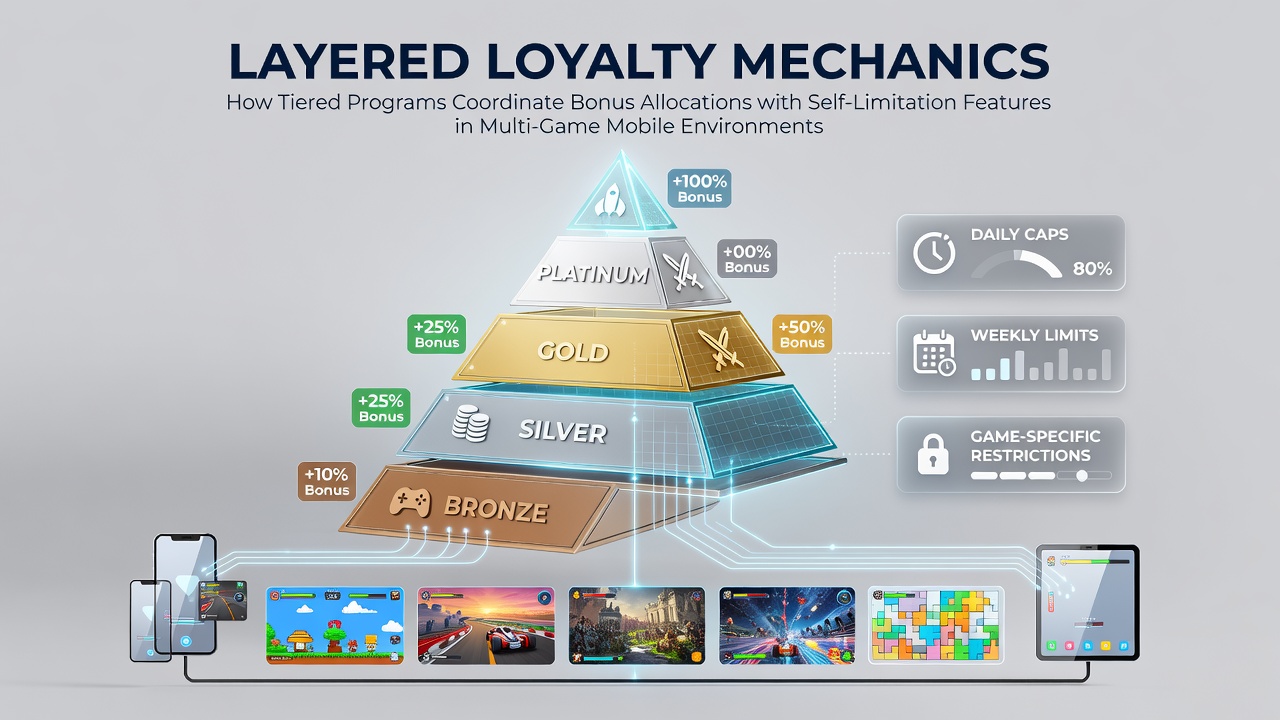
Operators in multi-game mobile environments structure tiered loyalty programs to manage bonus allocations while embedding self-limitation tools that players activate across slots, table games, live dealer sessions, and sports betting modules, and data from industry reports in June 2026 shows continued integration of these mechanics as platforms expand their offerings.
Core Components of Tiered Loyalty Frameworks
Platforms assign players to levels based on cumulative activity metrics such as wager volume, session frequency, and game type participation, which then determine the scale of bonus credits, free spins, or cashback percentages available in each category, while self-limitation features allow users to set deposit caps, time restrictions, and loss thresholds that apply uniformly across all game verticals on the same account.
Researchers at academic institutions have examined how these systems synchronize data streams so that a player reaching a higher tier receives proportionally larger rewards yet remains subject to any personal limits they previously established, and this coordination prevents automatic overrides that could bypass responsible play settings.
Bonus Allocation Mechanisms Across Game Types
Algorithms distribute bonuses according to tier status and recent activity patterns, granting higher-level participants enhanced multipliers on slot spins or table game rake rebates while routing a portion of those rewards through verification steps that check against active self-limits, and mobile interfaces display these allocations in unified dashboards so users see both available incentives and remaining thresholds in one view.
One case study from a North American regulatory review highlighted how a platform adjusted bonus releases when users approached their preset daily wager caps, pausing further allocations until the limit reset and thereby maintaining compliance with the player's chosen boundaries across sports betting and live dealer tables simultaneously.
Integration of Self-Limitation Features
Self-limitation tools operate through account-level controls that players configure at registration or later, with options to enforce cooling-off periods or spending ceilings that cascade into every game mode without requiring separate adjustments, and tier progression continues to calculate normally even when limits are active so rewards scale accordingly once restrictions lift.
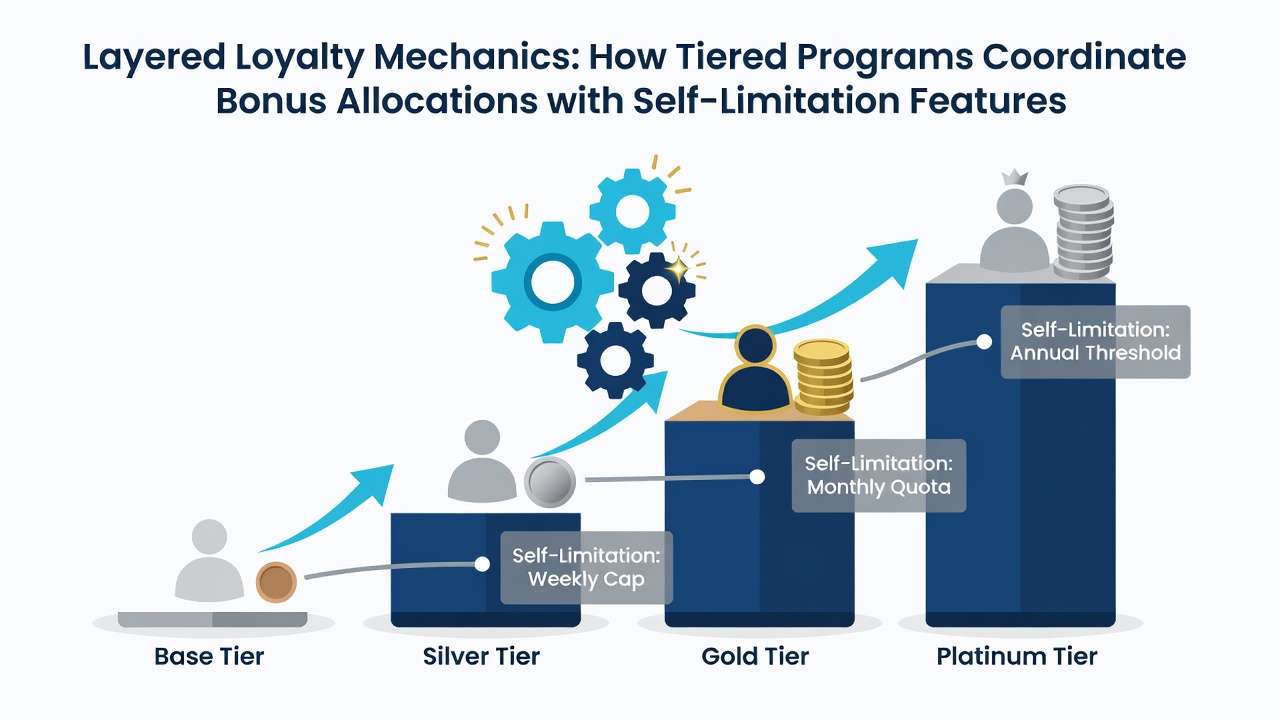
According to findings published by the Australian Gambling Research Centre, such layered systems reduced instances of limit circumvention when operators linked bonus eligibility directly to limit status, and updates rolled out in June 2026 further refined these linkages in several international markets.
Data Coordination in Mobile Multi-Game Settings
Backend systems track tier advancement and limit adherence through centralized databases that update in real time as players switch between game categories, ensuring that a bonus triggered in one vertical respects constraints set while playing another, and this approach supports consistent application without manual intervention from support teams.
Industry organizations such as the European Gaming and Betting Association have documented how these coordinated mechanics align with broader responsible gaming standards, noting that tiered rewards do not accelerate when limits are engaged and that players receive clear notifications when approaching boundaries.
Operational Examples from Current Platforms
Developers implement these features through modular APIs that connect loyalty engines with responsible gaming modules, allowing a player in a mid-tier to receive weekly cashback calculated on net losses yet automatically reduced if a monthly loss limit has been reached, and mobile notifications alert users when tier benefits interact with active controls.
Observers note that platforms operating in multiple jurisdictions maintain separate rule sets for each region while preserving the core coordination logic, so self-limits set under one regulatory framework continue to govern bonus releases even when the user accesses games from another area.
Conclusion
Tiered loyalty programs in multi-game mobile environments coordinate bonus allocations with self-limitation features through shared data protocols that maintain player-defined boundaries across all verticals, and ongoing refinements in 2026 demonstrate how these systems adapt to regulatory expectations without disrupting reward structures.